
Laser tattoo removal is a popular cosmetic procedure that involves using high-intensity light beams to break up the ink particles in a tattoo. This technique is considered safer and more effective than other methods, such as dermabrasion and chemical peels. Laser tattoo removal can be used to treat a wide range of tattoo types, including black, blue, green, and red ink.
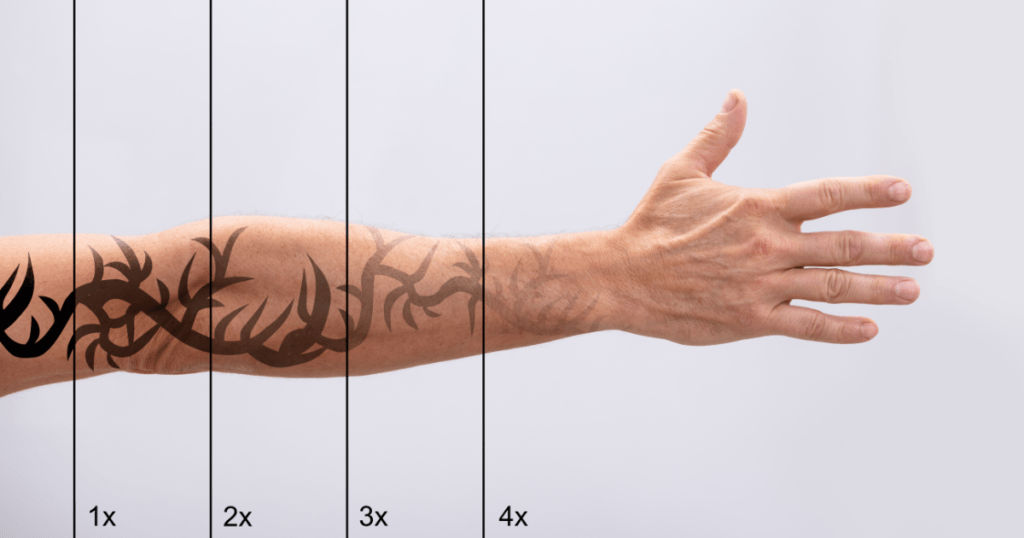
Tattoos have become increasingly popular in recent years, with millions of people getting inked every year. However, as people’s tastes and lifestyles change, they may want to remove their tattoos. This is where laser tattoo removal comes in. It offers a safe and effective way to remove unwanted tattoos without scarring or damaging the surrounding skin. The number of treatments required depends on the size, color, and location of the tattoo.
Understanding Laser Tattoo Removal
Laser tattoo removal is a popular and effective method of getting rid of unwanted tattoos. The process involves using high-intensity light to break down tattoo ink particles in the skin. In this section, we will explore the science behind laser tattoo removal, the types of lasers used, and the factors that affect the success of the removal process.
The Science of Laser Removal
Laser tattoo removal works by targeting the ink particles in the skin. The laser emits a high-intensity beam of light that penetrates the skin and breaks down the ink particles into smaller fragments. The body’s immune system then naturally removes these fragments over time.
The effectiveness of laser removal depends on the wavelength of the laser used. Different wavelengths are better suited for different colors of tattoo pigment. For example, the Nd laser is commonly used for black and blue ink, while the ruby laser is better for red and green ink.
Types of Lasers Used
There are several types of lasers used in laser tattoo removal, including the q-switched laser, which is the most commonly used. This type of laser emits short pulses of high-intensity light that are absorbed by the tattoo pigment.
Other types of lasers used for tattoo removal include the ruby laser, the alexandrite laser, and the Nd laser. Each of these lasers has a different wavelength and is better suited for removing certain colors of tattoo ink.
Factors Affecting Removal Success
Several factors can affect the success of laser tattoo removal. The color of the tattoo ink, the size and location of the tattoo, the age of the tattoo, and the type of skin can all impact the effectiveness of the removal process.
Darker skin tones can be more challenging to treat with laser tattoo removal, as the laser can sometimes cause hypopigmentation or hyperpigmentation. Older tattoos may also be more difficult to remove, as the ink particles may have settled deeper into the skin over time.
In conclusion, laser tattoo removal is a safe and effective method of removing unwanted tattoos. By understanding the science behind the process, the types of lasers used, and the factors that affect the success of the removal process, individuals can make informed decisions about whether or not laser tattoo removal is the right choice for them.
Procedure and Aftercare
Before the Treatment
Before undergoing laser tattoo removal, it is important to schedule a consultation with a dermatologist or certified laser technician. During the consultation, the patient’s medical history and skin type will be evaluated to determine the best course of treatment. The technician will also discuss the expected number of sessions required to achieve the desired results and provide an estimate of the cost.
During the Session
During the laser tattoo removal session, the technician will use a laser to send high-intensity pulses of light into the skin to break up the ink particles. The patient may experience some pain or discomfort during the procedure, but the technician can apply a numbing cream or local anesthesia to minimize any discomfort.
Post-Treatment Care
After the laser tattoo removal session, the treated area may be red, swollen, or blistered. The patient should keep the area clean and dry and avoid picking at any scabs or blisters that may form. Applying an antibacterial ointment and covering the area with a bandage can help prevent infection. The patient should also avoid exposing the treated area to the sun and use a high SPF sunscreen when going outside.
Potential Risks and Complications
While laser tattoo removal is generally safe, there are some potential risks and complications to be aware of. These include:
- Swelling, redness, blistering, or scarring
- Infection
- Hyperpigmentation or hypopigmentation
- Allergic reaction or skin irritation
Patients should discuss any concerns they have with their technician or dermatologist before undergoing laser tattoo removal. It is important to follow all aftercare instructions carefully to minimize the risk of complications and ensure a successful outcome.
Overall, laser tattoo removal is a safe and effective way to remove unwanted tattoos. With the proper care and attention, patients can expect a full recovery with minimal downtime.
Anew Laser
Are you ready to part ways with an unwanted tattoo? Look no further than Anew Laser for professional and reliable laser tattoo removal services. Our state-of-the-art technology and experienced team are dedicated to delivering exceptional results with minimal discomfort. Whether you’re seeking complete removal or a faded cover-up, our personalized approach ensures that your unique needs are met with precision and care. Take the first step towards reclaiming your skin and confidence by scheduling a consultation with Anew Laser. Let’s work together to make your tattoo regret a thing of the past.